The Natsarim
The Natsarim are the original covenant followers of Yeshua — a Torah-affirming remnant who believed Moses and the Prophets and recognized Yeshua as Messiah. This page explains the name, the Scriptural identity, and the boundary lines that separate the Natsarim from later religious systems.
This is not a modern rebrand. It is a return to the Scriptural identity of the people who walked “The Way.”
Who Are the Natsarim?
The Natsarim are the original covenant followers of Yeshua — a Torah-affirming people who believed Moses and the Prophets and recognized Yeshua as the promised Messiah of Israel. They did not see themselves as members of a new religion, but as faithful Israelites continuing to walk the path Yahweh had already established.
In the first century, belief in Yeshua did not mean abandoning the Torah. The Natsarim remained devoted to Yahweh’s covenant instructions, understood Scripture as a unified whole, and followed Yeshua as a teacher who upheld and embodied the Law — not one who replaced it.
The name “Natsarim” identifies a people defined by faithfulness, not innovation. They were known for guarding the covenant, remaining loyal to Yahweh’s commands, and refusing to separate the Messiah from the Torah that testified about him.
- They affirmed the Torah and the Prophets as authoritative Scripture.
- They recognized Yeshua as Messiah, not as the founder of a new religion.
- They understood faith as covenant loyalty — trust proven through obedience.
The Natsarim were distinct not because they rejected Israel’s Scriptures, but because they refused to abandon them. Their identity stood in contrast to both lawless belief and later religious systems that redefined covenant faithfulness.
The Natsarim were not reformers or innovators. They were preservers — a people committed to walking the same covenant path Yahweh revealed from the beginning.
Key references: Acts 24:5–14 • Acts 21:20 • Matthew 5:17–19 • Isaiah 8:16 • Psalm 119:1
The Name “Natsarim”
The name Natsarim is not accidental, nor is it merely geographic. In Scripture, names carry meaning, identity, and vocation. “Natsarim” is rooted in Hebrew concepts associated with guarding, preserving, and remaining faithful to what Yahweh has entrusted.
Throughout the Tanakh, Yahweh repeatedly calls His people to guard His covenant — to keep His commandments, protect His words, and walk carefully in the path He set. The Natsarim understood themselves as a people tasked with preserving the covenant, not modifying it to suit cultural pressure.
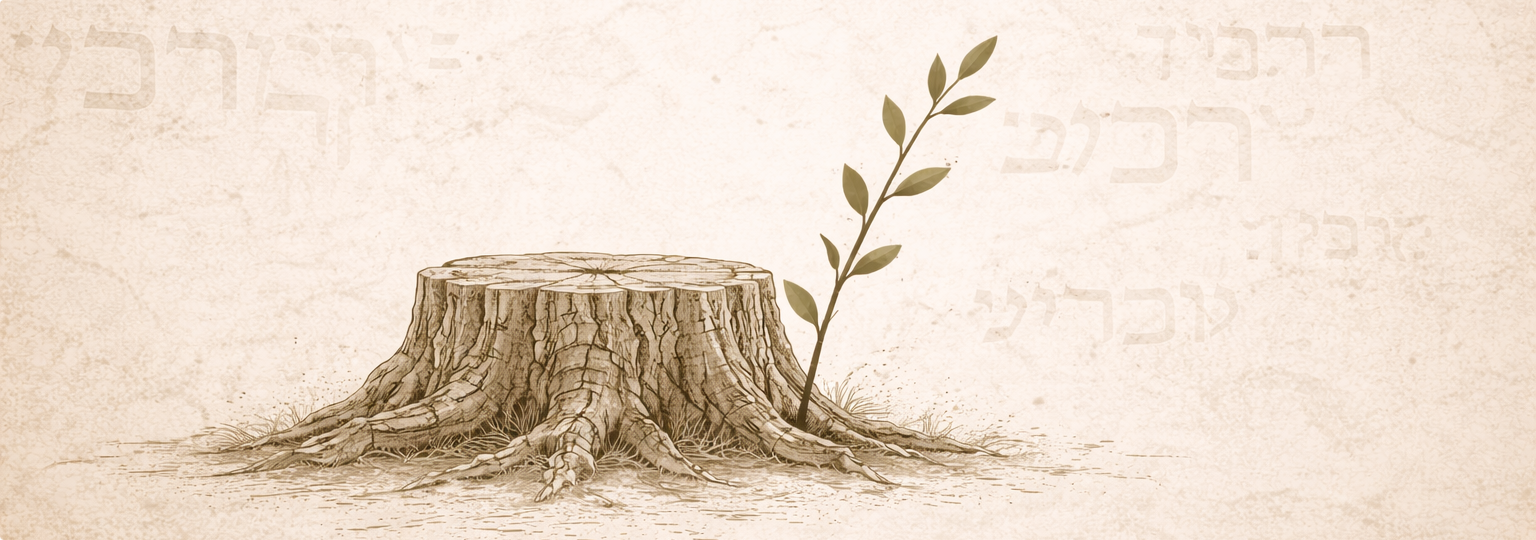
The name is also closely associated with the prophetic imagery of a branch — something living, preserved, and brought forth according to Yahweh’s promise. The Messiah himself is described using this imagery, reinforcing that faithfulness to Yahweh’s covenant and loyalty to the Messiah are inseparable.
- Guarding the covenant: keeping Yahweh’s commands and refusing to replace them with tradition.
- Preserving truth: holding fast to Scripture as given, even when it becomes unpopular or costly.
- Remaining rooted: staying connected to Israel’s Scriptures rather than creating a new religious identity.
To bear the name “Natsarim” was not simply to hold a belief about Yeshua. It was to accept responsibility — to live as a people who guard Yahweh’s covenant and walk faithfully in the way He revealed.
The name “Natsarim” points to vocation, not innovation — a calling to preserve what Yahweh planted, not to uproot it.
Key references: Isaiah 11:1 • Isaiah 26:2–3 • Deuteronomy 4:2 • Psalm 119:33–34 • Acts 24:5
Natsarim in Scripture
The Natsarim are not identified by later tradition or retrospective labels. They appear directly in Scripture, named and described in the book of Acts as a recognizable group in the first-century.
In Acts, followers of Yeshua are repeatedly referred to as belonging to “The Way”. When accusations are brought against Paul, his opponents identify him as a leader of the sect of the Natsarim — not as a founder of a new religion, but as part of a distinct group within Israel.
Paul does not deny the label. Instead, he affirms it and explains what it means: that he worships the Elohim of his fathers, believes everything written in the Torah and the Prophets, and maintains hope in the resurrection just as the Scriptures teach.
- The Natsarim are described as a sect within Israel, not a separate religion.
- They are associated with The Way, a recognizable path of life and obedience.
- They affirm the Torah, the Prophets, and the resurrection taught in Scripture.
Far from rejecting Israel’s faith, the Natsarim are shown defending their continuity with it. The accusations against them are not that they abandoned Torah, but that they followed Yeshua as Messiah while remaining faithful to the covenant.
Scripture presents no moment where the Natsarim “become Christians” or redefine themselves as something new. The break comes later from outsiders, as obedience to Torah and loyalty to Israel’s Scriptures are increasingly separated from belief in the Messiah.
In Scripture, the Natsarim are identified not by novelty, but by continuity — worshiping the Elohim of Israel and walking the same covenant path revealed in the Law and the Prophets.
Key references: Acts 9:2 • Acts 21:20–24 • Acts 24:5–14 • Acts 28:22 • Daniel 12:2
Not Christians, Not Rabbinic Jews
The Natsarim are often misunderstood because people assume there are only two categories: “Christian” or “Jew.” Scripture presents a different framework. The Natsarim are a covenant people within Israel’s story — Torah-affirming followers of Yeshua — and that places them in tension with both Christianity and rabbinic Judaism.
This distinction matters because labels shape expectations. If someone assumes “Christian,” they will assume Torah is optional or abolished. If someone assumes “rabbinic Jew,” they will assume later tradition has authority equal to or above Scripture. The Natsarim reject both assumptions.
- Not Christians: The Natsarim do not treat the Torah as abolished, replaced, or merely symbolic. They understand covenant obedience as the expected walk of Yahweh’s people and they refuse to exchange Yahweh’s commands for church tradition.
- Not rabbinic Jews: The Natsarim respect Israel’s history and can learn from Jewish scholarship, but they do not grant later rabbinic rulings the authority to add to, override, or replace the written Torah and the Prophets — and they confess Yeshua as Messiah.
In short, the Natsarim are not a hybrid of two modern identities. They are the original covenant framework: Israel’s Scriptures as the foundation, Torah as the covenant standard, and Yeshua as Messiah — all held together without contradiction.
The Natsarim position is simple: Scripture is the authority, Torah is not disposable, and Messiah does not contradict the covenant.
Key references: Isaiah 8:20 • Deuteronomy 4:2 • Matthew 5:17–19 • Acts 24:14 • Revelation 12:17
What Natsarim Believe
Natsarim beliefs are not built on creeds or later theological systems. They are drawn directly from Scripture and organized around Yahweh’s covenant purposes. Belief is understood as faithful allegiance — trust expressed through obedience — rather than abstract agreement.
At the center of Natsarim belief is the conviction that Scripture is a unified witness: the Torah, the Prophets, and the writings testify consistently, and the Messiah does not overturn what Yahweh established.
- Yahweh is One. He is the Creator, covenant King, and ultimate authority over His people.
- The Torah remains valid. Yahweh’s instructions define righteousness and covenant life and are not abolished or replaced.
- Yeshua is the Messiah of Israel. He fulfills the promises of Scripture and perfectly embodied covenant obedience, calling his followers to walk as he walked.
- Faith is covenant loyalty. Trust in Yahweh is demonstrated through obedience, repentance, and perseverance — not mere verbal confession.
- Resurrection is the hope. The righteous will be raised to life as Scripture promises; reward and judgment are future realities, not immediate destinations at death.
These beliefs shape daily life. They influence worship, ethics, family, community, and the way Natsarim understand salvation, judgment, and the coming kingdom. Belief is never detached from practice.
For the Natsarim, belief is not something you merely hold — it is something you walk.
Key references: Deuteronomy 6:4–6 • Psalm 119:142 • Matthew 5:17–19 • James 2:17–18 • Revelation 14:12
Why the Name Matters
In Scripture, names are never incidental. They communicate identity, allegiance, and calling. The name Natsarim matters because it accurately reflects who these people were — and what they were committed to preserving.
Over time, replacing biblical names with new labels reshaped theology. When the original name was abandoned, the original framework soon followed. The loss of the name “Natsarim” coincided with the loss of covenant continuity, Torah observance, and Scriptural definitions of faith.
Reclaiming the name is not about nostalgia or novelty. It is about restoring clarity. The name draws a clear line: allegiance to Yahweh’s covenant, loyalty to His Torah, and confession of Yeshua as Messiah — without compromise or redefinition.
- The name anchors identity in Scripture rather than later religious movements.
- It preserves theological boundaries that were blurred over time.
- It calls people back to the original covenant path described in the Bible.
For those who walk this path today, adopting the name “Natsarim” is not a badge of superiority. It is a declaration of responsibility — to guard Yahweh’s covenant, to walk faithfully in The Way, and to remain rooted in Scripture regardless of cost.
The name “Natsarim” does not create the identity — it names the identity Scripture already describes.
Key references: Isaiah 62:2 • Jeremiah 6:16 • Acts 11:26 • Revelation 3:8 • Revelation 14:12
Want the full theological framework?
Go to “Beliefs” →